Metro Dynamics has worked with the Royal Society of Chemistry to produce The Contribution of Chemistry, a new report setting out how chemistry capability translates into economic value across the UK.
Chemistry is fundamental to the UK economy. It underpins the products, technologies and services we rely on every day, supports innovation across industries, and plays a critical role in national priorities including net zero, health, resilience and growth. Yet its contribution is not always easy to see. Chemistry does not sit neatly within a single sector. Instead, it is a capability woven through supply chains, research systems, skills pipelines, industrial processes and place-based innovation ecosystems.
The report shows that the chemical sciences contributed £60.5 billion in Gross Value Added to the UK economy in 2023, and overall GVA contribution growing by 18% between 2019 and 2023. It also finds that 327,500 people were employed in chemistry occupations, and that almost half of chemistry-using workers are employed in the UK Government’s priority Industrial Strategy sectors.
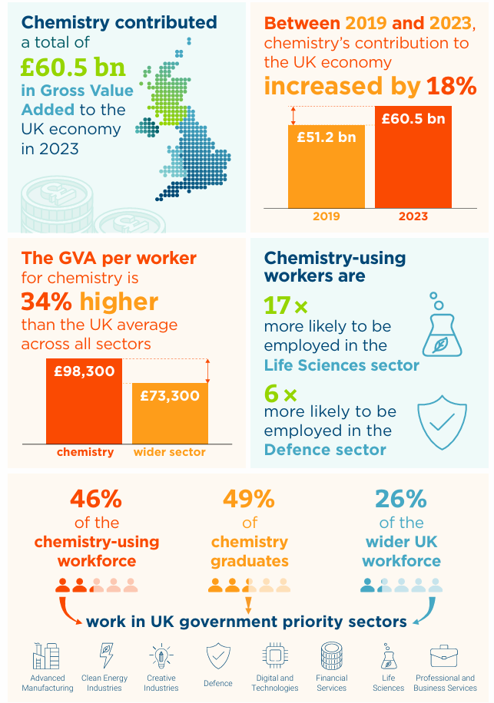
Source: Royal Society of Chemistry
At a time when the UK is focused on industrial strategy, reindustrialisation and devolved growth, this matters. Local and national leaders need to understand what really underpins the opportunities for growth in their places. This is not always the activity that is easiest to count. Cross-cutting capabilities can slip between the cracks of conventional economic analysis and policy frameworks, even when they are critical to productivity, resilience and future competitiveness.
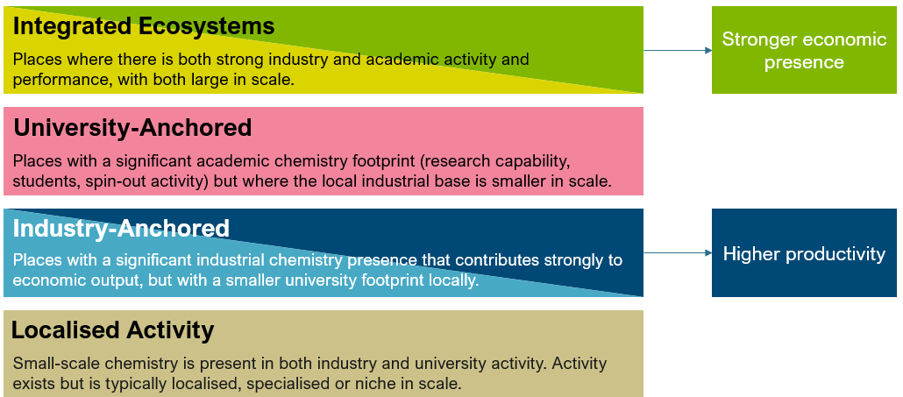
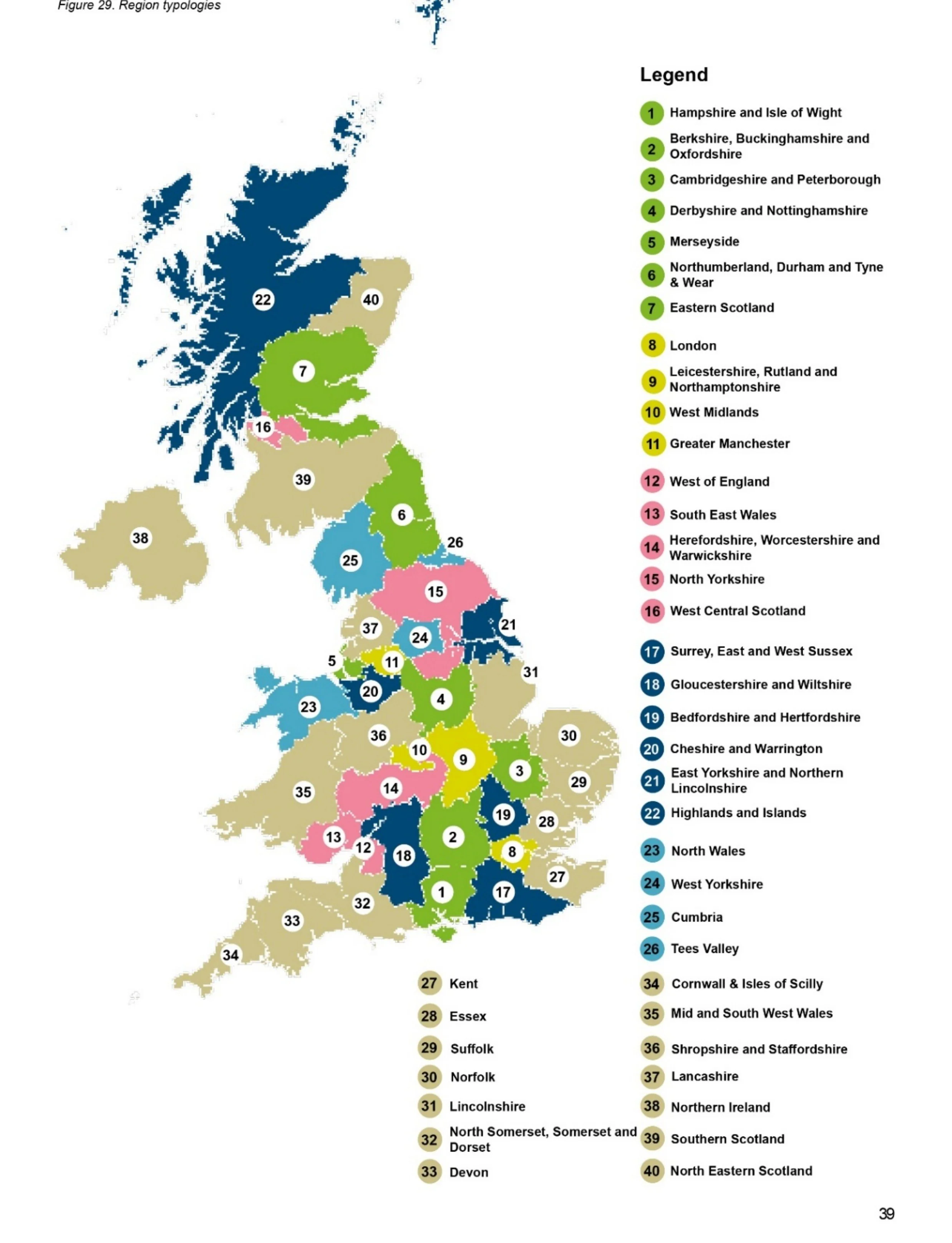
The report therefore looks beyond headline economic indicators. It brings together analysis of economic activity, workforce and graduate pipelines, research capability, spinouts and place-based ecosystems to understand how, where and why chemistry contributes to the UK economy. It also introduces a typology to understand ecosystems, showing that different places play different roles in the wider chemistry value chain, from discovery and talent generation through to commercialisation, manufacturing and deployment.
This place-based lens is crucial. As more responsibility for growth, skills, innovation and industrial development moves towards devolved, regional and local leaders, places need clear evidence on the capabilities that sit within their economies, the role those capabilities play, and where stronger connections are needed between research, skills, innovation, commercialisation and production.
The opportunity now is to use this evidence to make chemistry more visible within economic decision-making, strengthen the pathways through which research and skills translate into long-term economic value, and support more active delivery of the UK’s growth ambitions.
For Metro Dynamics, the work reflects our wider focus on helping national bodies, institutions and places understand complex economic systems and turn in-depth evidence into practical frameworks for action. Our Sectors, Clusters and Innovation team works with clients to move from strategy and analysis into system design, helping organisations understand sector and capability strengths in a place-sensitive way, and working closely together to inform , mobilisation and delivery support., Through this, we are able to translate understanding into investment, governance and delivery choices.
To read the report, and find out more about the RSC, visit https://rsc.li/the-contribution-of-chemistry
Or download the full report: here
The UK Chemistry Ecosystem Map